
GPS Spoofing: A Growing Risk for Humanitarian Vehicle Convoys
12 January 2026 - Humanitarian & Key accounts

12 January 2026 - Humanitarian & Key accounts
Humanitarian organizations operating vehicle convoys in high-risk regions are increasingly exposed to GPS spoofing and jamming attacks that can distort vehicle positions, disrupt fleet coordination and weaken operational decision-making.
Building on its long-standing expertise in satellite-based mobility and its HUMANAV fleet monitoring platform, CLS supports humanitarian actors worldwide in detecting positioning anomalies, securing convoy operations and maintaining reliable situational awareness even in contested environments.
Satellite positioning has become a critical pillar of humanitarian logistics. Vehicle tracking, convoy coordination, security monitoring and mission reporting all rely on the integrity of GNSS data. At the same time, GPS spoofing and jamming techniques have become more widespread, particularly in conflict zones and geopolitically sensitive areas where electronic interference is increasingly used as a tactical tool.
By emitting false satellite signals or saturating receivers with interference, spoofing and jamming can mislead navigation systems without necessarily triggering a complete loss of signal. Vehicles may therefore continue to transmit positioning data that appears valid while being fundamentally incorrect.
For humanitarian organizations, this creates a new operational reality in which positioning data can no longer be taken at face value.
Contact us to see ho we can support your humanitarian missions
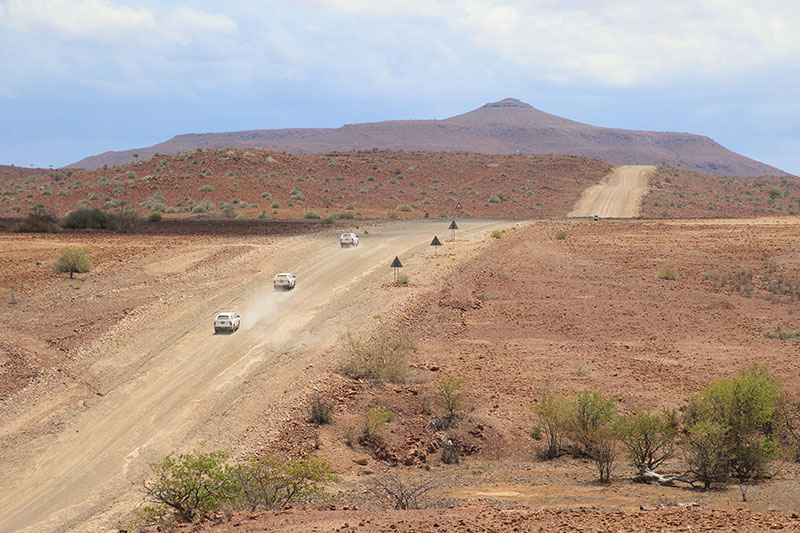
When GPS spoofing affects a humanitarian fleet, its consequences are immediately visible on fleet monitoring platforms and in operational workflows.
Vehicles may appear immobilized at locations where they are not actually present or suddenly show abrupt and unrealistic position changes before returning to their true route. In some cases, several vehicles passing through the same area display identical inconsistencies, making it difficult to distinguish isolated incidents from systemic disruptions.
These anomalies can also translate into incoherent speed, direction or mileage data, which impacts mission reporting, performance indicators and post-operation analysis. Beyond data quality issues, the real risk lies in the loss of trust in fleet information, which can slow down decision-making and complicate coordination in already challenging environments.
CLS has been working for decades at the intersection of satellite technologies, mobility monitoring and operations in complex and remote environments. This long-standing experience has led to a deep understanding of GNSS behaviors, their vulnerabilities, and the operational constraints faced by humanitarian actors in the field.
Within this context, HUMANAV plays a central role as CLS’s fleet monitoring platform dedicated to humanitarian operations. Beyond basic vehicle tracking, HUMANAV is designed to provide a comprehensive and contextual view of fleet activity, supporting operational awareness in environments where positioning data can be degraded, disrupted or inconsistent.
Building on its satellite expertise and field experience, CLS continuously analyzes GNSS-related risks and positioning anomalies observed in real operational conditions. This knowledge feeds ongoing efforts to strengthen data validation approaches, improve anomaly identification and enhance fleet monitoring resilience within the HUMANAV platform, in close alignment with humanitarian operational needs.
As GPS spoofing becomes a persistent risk rather than an isolated anomaly, resilience is now a strategic requirement for humanitarian mobility. CLS continues to strengthen HUMANAV’s detection and alerting mechanisms while working closely with humanitarian partners to refine analyses and countermeasures based on real operational feedback.
By combining satellite expertise, data intelligence and a field-oriented platform approach, CLS helps humanitarian organizations secure their vehicle convoys and maintain reliable situational awareness, even in the most challenging environments.