
How to monitor fuel consumption in humanitarian fleets with limited onboard systems: a use case from Uganda
29 May 2026 - Humanitarian & Key accounts

29 May 2026 - Humanitarian & Key accounts

In humanitarian operations, ideal conditions rarely exist. NGOs and aid organizations often work in remote and challenging environments, managing mixed vehicle fleets with strong operational and technical constraints in the field.
At CLS, we believe these realities should not be a limitation. Our approach is to fully understand field conditions and develop solutions that fit the operational context, supporting humanitarian logistics and fleet management where it matters most.
We work alongside humanitarian actors to address concrete operational challenges: improving efficiency, monitoring resources, securing operations, and increasing field performance. This means adapting to complex environments, operating in constrained areas, and working with vehicles that are sometimes old or only minimally equipped.
One example is fuel consumption monitoring for humanitarian fleets that do not have modern onboard electronics. In these situations, standard telematics solutions are often not suitable. CLS therefore develops tailored alternatives that make it possible to collect, analyze, and use field data, even in degraded or low-connectivity environments.
This is exactly the approach we implemented with one of our clients operating in Uganda, as part of a humanitarian fleet digitalization project focused on improving fuel management and operational visibility.
Facing similar challenges in your field operations?
Feel free to get in touch with our team
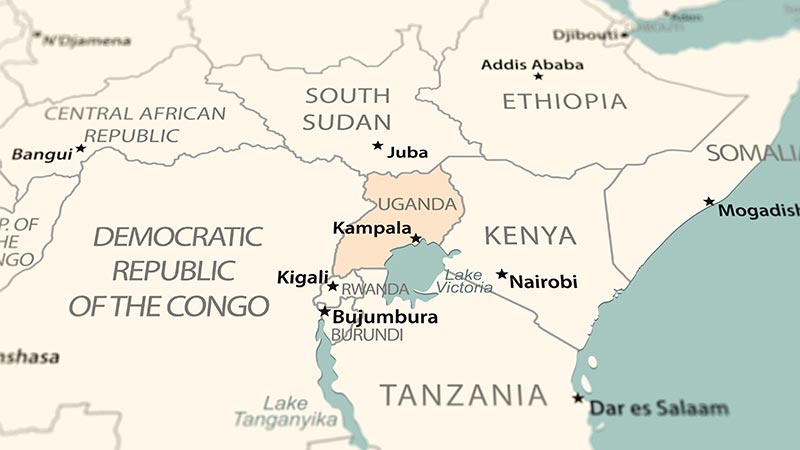 Our client, a humanitarian organization managing an aging vehicle fleet, faced significant challenges in monitoring fuel consumption. They needed a reliable and field-adapted solution to improve fuel management, ensure accurate data collection, and support more efficient operational decision-making.
Our teams worked closely with them to assess the situation, carry out field testing, and deploy a practical solution designed to meet the realities and constraints of humanitarian operations.
Everything starts with a detailed understanding of the operational environment. In Uganda, humanitarian fleets are often made up of mixed and aging vehicles, with little or no advanced onboard electronics or telematics systems. These vehicles operate in difficult conditions: poor road infrastructure, remote locations, and limited maintenance resources.

In this context, monitoring fuel consumption becomes a real operational challenge. Traditional processes still rely heavily on manual reporting, which can be time-consuming, inconsistent, and difficult to manage at scale.
The challenge was therefore twofold. The solution had to remain compatible with older vehicles while also providing fleet managers with reliable and actionable data to improve fuel management and operational visibility.
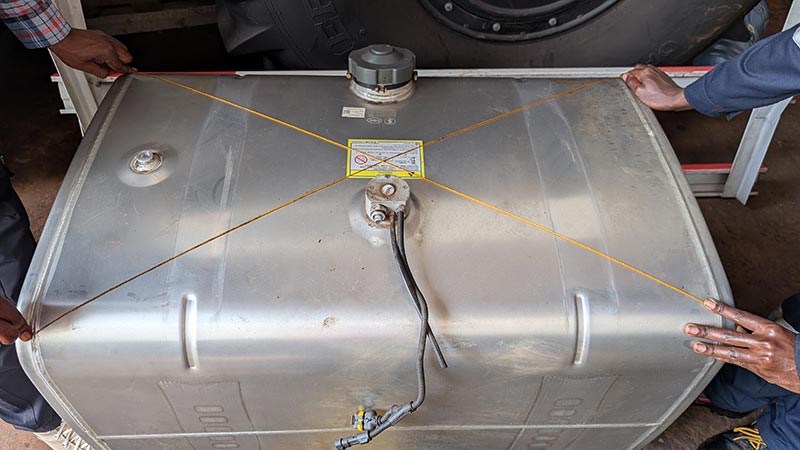
To address these operational constraints, CLS adopted a field-driven approach. Rather than developing and validating the solution in a controlled environment, our teams carried out on-site testing in Uganda in collaboration with a fuel probe manufacturer.
Working directly in real operating conditions made it possible to immediately assess the solution across different vehicle types, evaluate ease of installation and usage for local teams, and verify its reliability in demanding environments.
This phase also provided valuable feedback from end users, helping adapt the solution to actual field needs and operational practices. The Proof of Concept confirmed both the technical relevance of the system and its suitability for day-to-day humanitarian operations.
The deployed solution is based on the installation of fuel level probes directly inside vehicle tanks. This approach makes it possible to overcome the lack of onboard electronic systems while ensuring accurate fuel consumption monitoring.
 “The installation requires precise adaptation to each tank shape: tank drilling, secure probe integration, and calibration according to the specific characteristics of the tank.
This technical phase is essential to ensure the reliability of the collected data. The calibration of a tank may require more or less time depending on its profile.” explains Gwenael Courtay, project leader of Humanitarian Embedded Solutions at CLS.
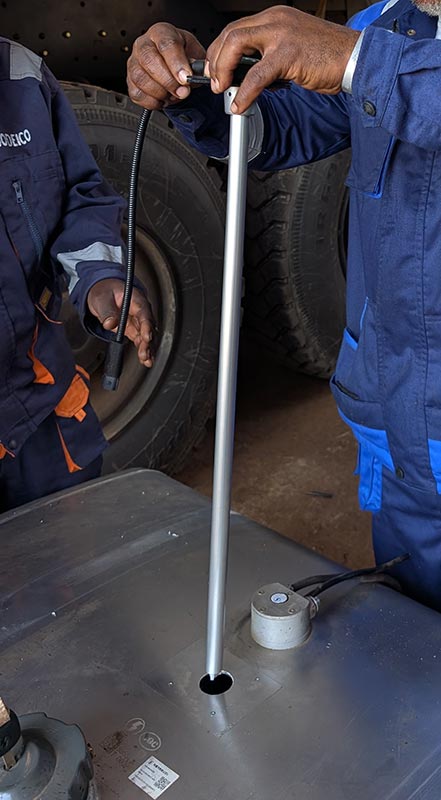
Thanks to these probes, fleet managers can continuously monitor fuel level variations and better understand consumption patterns. The system also helps identify anomalies such as excessive fuel consumption, leaks, or fuel theft, while improving operational transparency.
For humanitarian organizations operating in complex environments, this type of solution provides a practical and efficient response to fuel management challenges, where every resource matters.
Once the data is collected, turning it into actionable insights becomes a key driver for improving humanitarian operations. Information gathered from the fuel probes is centralized and analyzed through the HUMANAV platform, dedicated to fleet management and the digitalization of field operations.
Learn more about the HUMANAV platform
HUMANAV enables NGOs and humanitarian organizations to monitor fleet deployment in real time and track key operational indicators such as fuel consumption. This analytical capability supports faster decision-making and improves overall operational oversight.
Fleet managers can better optimize resource allocation, reduce losses, prevent fraud, and improve the overall efficiency of their operations. In highly constrained humanitarian and political environments, these operational gains are critical to maximizing mission impact.
HUMANAV also helps organizations to:

“HUMANAV has become a key tool in the digital transformation of humanitarian operations.
It is designed to operate efficiently in constrained environments while addressing the specific needs of the humanitarian sector,” explains Vincent Scesa, HUMANAV Product Director at CLS.
This use case in Uganda perfectly illustrates CLS’s approach to humanitarian operations: starting from real field constraints to build effective and sustainable solutions.
By combining technical expertise, on-the-ground presence, and strong adaptability, CLS supports humanitarian organizations in optimizing fleet management, improving fuel tracking, and enhancing operational performance.